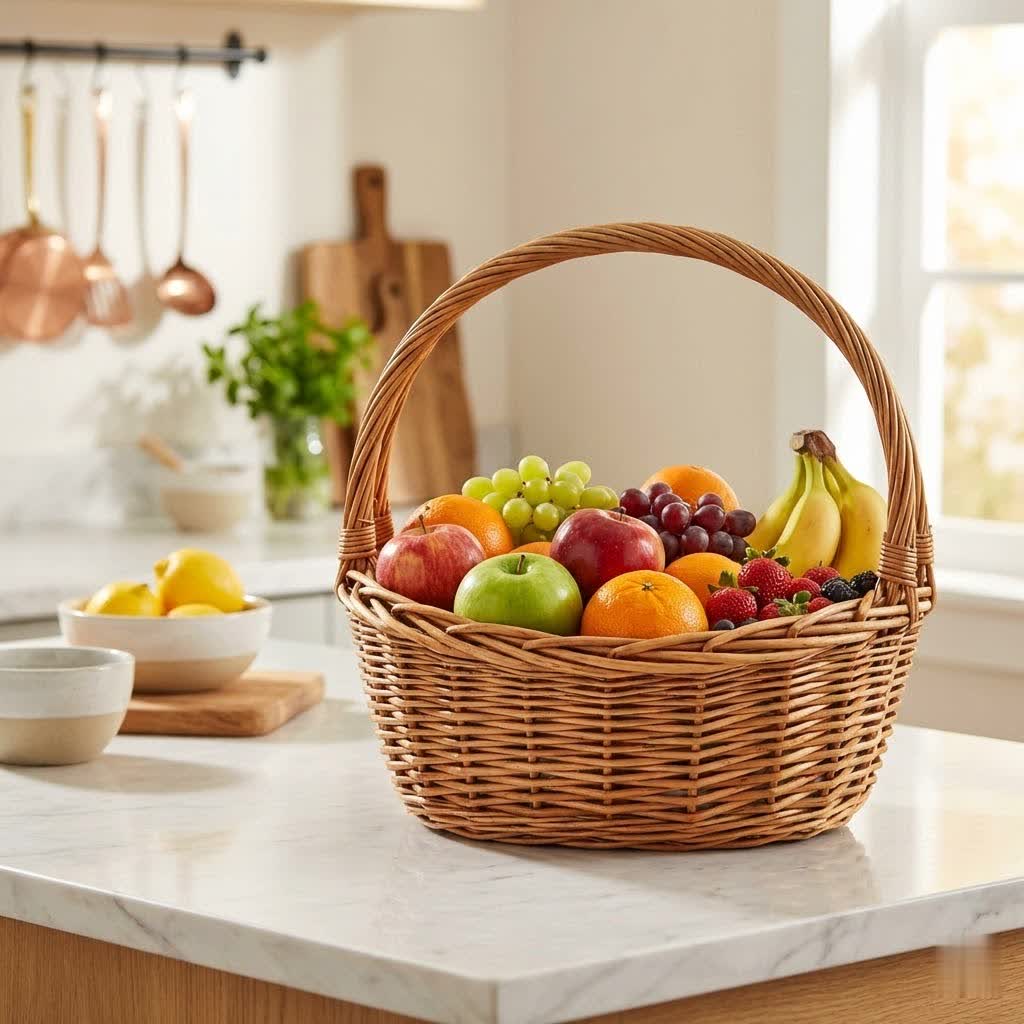
A vibrant display of fresh fruit on your kitchen countertop isn’t just a pretty sight; it’s a statement of healthy living and smart home organization. For over a decade, as the Admin of reviewnreset.com, I’ve explored countless fruit storage solutions, understanding what truly makes a Countertop Fruit Basket a game-changer for any home. From classic designs to innovative multi-tiered systems, choosing the right one can significantly impact your produce’s freshness, kitchen aesthetics, and daily habits.
Popular Types of Countertop Fruit Baskets
The world of countertop fruit baskets offers a diverse array of materials, each bringing unique advantages and disadvantages to your kitchen. Understanding these can help you select a basket that not only looks good but also functions optimally for your lifestyle.
Metal Fruit Baskets
Metal baskets, including those made from wire mesh, stainless steel, powder-coated iron, or copper, are a perennial favorite. Their open designs promote excellent air circulation, crucial for slowing down the ripening process and preventing moisture buildup that leads to spoilage.
- Pros: Excellent airflow, durable, sturdy, easy to clean, often resistant to rust (especially stainless steel or properly coated iron). Available in sleek, modern, or industrial styles. Multi-tiered metal baskets are fantastic for maximizing vertical space.
- Cons: Wire designs can sometimes allow smaller fruits to slip through. Some cheaper metals might be prone to rust over time if not cared for.
|
Our Picks for the Best Fruit Basket in 2026
We may earn a commission when you use one of our links to make a purchase.
|
||
| Num | Product | Action |
|---|---|---|
| 1 | 2 Tier Large Fruit Basket for Kitchen Counter with Removable Banana Hanger - Sturdy Iron Fruit Bowl for Kitchen Counter and Vegetable Holder, Fruit Holder for Kitchen Countertop, Black |

|
| 2 | 2 Tier Large Fruit Basket for Kitchen Counter with 2 Banana Hangers, Metal Stackable Fruit Bowl for Kitchen Counter for Bread Vegetable Fruits, Black |
|
| 3 | 2 Tier Fruit Basket for Kitchen Counter - Detachable Metal Fruit Bowl with 2 Banana Hangers for Corner , Large Capacity Fruit Stand with Wooden Handle for Fruit Bread Veggies Storage |
|
| 4 | Auledio Iron 2-Tier Countertop Fruit Vegetables Basket Bowl Storage With Banana Hanger, Black, 64 ounces |
|
| 5 | Remerry 2 Pcs Scalloped Edge Round Basket Hand Woven Paper Rope Storage Basket for Shelf Nursery Room Table Organizing, Easter Party Supplies |
|
| 6 | 3-Piece Rattan Basket Set with Lids – Handcrafted Vietnamese Woven Organizers, Tapered Design (S/M/L) (1 Pack Rectangular Open-Top, 11 Inch (28 cm)) |
|
| 7 | 2-tier Fruit Basket Bowl,Metal Basket with Wooden Base,Fruit and Vegetable Storage with Banana Hanger,Fruit Basket for Kitchen Counter Organizer. |
|
| 8 | ANTOPY 2 Tier Fruit Basket with 2 Banana Hangers, Countertop Fruit Vegetable Basket Bowl for Kitchen Counter Metal Wire Fruits Storage Stand Holder Organizer for Bread Snack Veggies Produce |
|
| 9 | 3-Tier Wooden Fruit Basket – Rubberwood Countertop Produce Storage with Metal Frame – Minimal Scandinavian Design Fruit Stand for Kitchen Counter, Space-Saving Tiered Basket Organizer |
|
| 10 | 2 Tier Large Fruit Basket for Kitchen Counter with 2 Mobile Banana Hangers, 2026 Pro Detachable Metal Fruit Bowl with Wooden Handle, Fruit Holder for Bread Snack Veggies with Protective Mats |
|
Wooden Fruit Baskets
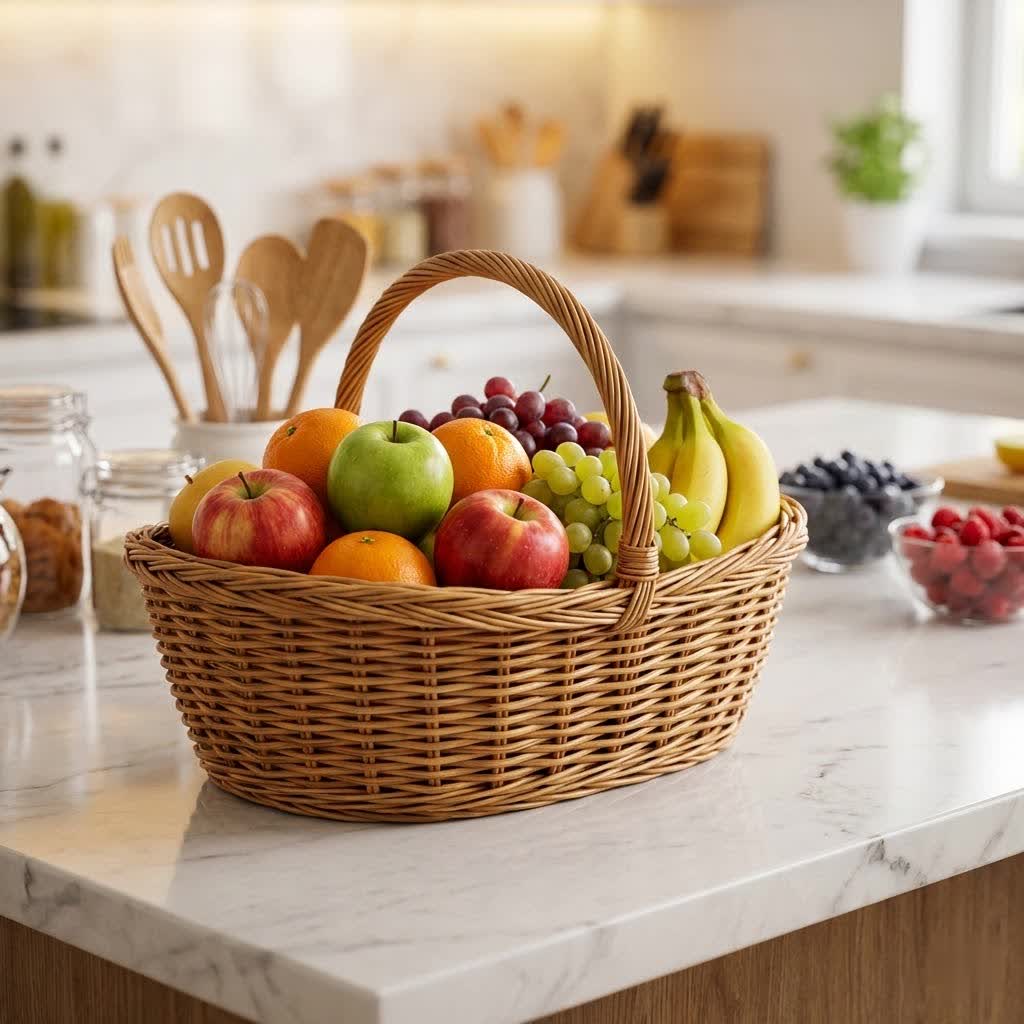
Wood, rattan, cane, or bamboo baskets bring a touch of natural warmth and rustic charm to any kitchen. These handcrafted options are prized for their aesthetic appeal and ability to blend seamlessly with various decor styles.
- Pros: Environmentally friendly, adds a sophisticated or earthy aesthetic, can be very sturdy and long-lasting if well-maintained. Certain woven designs still offer decent airflow.
- Cons: Can be more expensive than other materials. Wood can be susceptible to moisture damage, mold, or pests if not properly cared for. Cleaning can be more challenging compared to metal.
Ceramic Fruit Bowls
While often referred to as “bowls,” ceramic options can also function as stylish fruit storage. They typically come in solid forms or with some perforations.
- Pros: Elegant and substantial, can provide good temperature stability for certain produce, often a beautiful decorative piece.
- Cons: Heavier and more fragile than other materials. Solid ceramic bowls can restrict airflow, accelerating ripening and spoilage if not designed with ventilation in mind.
Plastic Fruit Baskets
Plastic baskets are generally the most affordable and come in a vast array of colors and designs.
- Pros: Inexpensive, lightweight, easy to clean, diverse range of shapes and sizes.
- Cons: Often lack the aesthetic appeal of natural or metal materials. Poor airflow in solid designs can cause fruit to “sweat,” leading to faster decay and bacteria growth. Less environmentally friendly.
Comparing Popular Fruit Basket Designs
Beyond material, the design of your fruit basket plays a crucial role in its functionality and how it integrates into your kitchen space.
Single-Tier Bowls
These are the classic, straightforward option. Ideal for smaller fruit quantities or for specific fruits that need to ripen together. However, a single, deep bowl can easily overcrowd fruit, especially if it’s filled to the brim, restricting crucial airflow and leading to premature spoilage.
Multi-Tiered Baskets
Two-tier or three-tier designs are excellent for maximizing vertical space on your countertop. They allow you to store a larger variety and quantity of fruit without sprawling across your precious counter real estate. Moreover, they enable you to separate fruits that produce ethylene gas (like apples and bananas) from those that are sensitive to it (like berries), thereby extending the freshness of your produce.
Hanging Baskets and Hammocks
For kitchens truly starved of counter space, hanging baskets or under-cabinet fruit hammocks are ingenious solutions. They offer exceptional airflow and keep fruit visible yet out of the way. While not strictly “countertop,” many kitchens utilize a dedicated corner of the counter or an island to place a hook for these.
Specialized Features
Some fruit baskets come with integrated banana hooks, which are invaluable. Hanging bananas prevents bruising and allows for more even ripening, extending their shelf life significantly. Others might feature a mesh cover to protect fruits from insects and dust, especially useful during warmer months or in open-concept living spaces.
Guide to Choosing the Perfect Countertop Fruit Basket
Selecting the ideal fruit basket involves more than just picking the prettiest one. Consider these key factors to ensure it meets your practical needs and aesthetic desires.
-
Assess Your Needs:
- Quantity of Fruit: How much fruit does your household consume weekly? A small family might be fine with a single bowl, while larger families or avid fruit-eaters will benefit from multi-tiered baskets or larger capacities.
- Countertop Space: Measure your available counter space. If space is limited, a narrow multi-tiered basket or one designed for corners can be a lifesaver.
- Fruit Variety: Do you store a mix of ethylene-producing and sensitive fruits? Tiered designs help keep them separate.
- Aesthetic Preferences: Do you lean towards modern, rustic, minimalist, or traditional decor? The basket should complement your kitchen’s overall style.
-
Prioritize Airflow: This is paramount for fruit freshness. Opt for open designs like wire mesh, loosely woven wood, or perforated ceramic bowls. Avoid solid, deep containers that trap moisture and ethylene gas, as this will accelerate spoilage.
-
Consider Material Durability and Maintenance: Choose a material that can withstand daily use and is easy to clean. Metal and certain treated woods offer longevity. Think about how much effort you’re willing to put into cleaning and maintaining the basket to prevent mold or rust.
-
Stability and Design: A good fruit basket should have a stable base to prevent tipping, especially when full. Look for features like non-slip feet. If choosing a multi-tiered option, ensure its structure is robust.
Tips for Maintaining Your Fruit Basket and Keeping Fruit Fresh
Even the best fruit basket needs a little care to keep your produce at its prime.
Cleaning and Hygiene
- Regular Cleaning: Aim to clean your fruit basket thoroughly once a week. This prevents the buildup of bacteria, sticky residues from overripe fruit, and deters fruit flies.
- Material-Specific Care:
- Metal: Wash with warm, soapy water and dry completely to prevent rust.
- Wood/Rattan: Wipe with a damp cloth and mild soap. Ensure it’s air-dried thoroughly in a well-ventilated area to prevent mold. Avoid soaking.
- Ceramic: Most are dishwasher-safe, but handwashing is recommended for delicate designs.
- Prompt Removal: Immediately remove any overripe, bruised, or moldy fruit. One bad apple literally can spoil the whole bunch by releasing excessive ethylene gas.
Optimizing Fruit Freshness
- Air Circulation is Key: Never overcrowd your fruit basket. Leave space between fruits for air to circulate. This is why open designs are superior.
- Separate Ethylene Producers: Keep fruits like apples, bananas, avocados, and tomatoes away from ethylene-sensitive fruits such as berries, grapes, and leafy greens. Multi-tiered baskets are perfect for this.
- Understand Storage Needs: Not all fruits belong in a fruit basket. While many thrive at room temperature, berries, grapes, and cut fruits benefit from refrigeration.
- Visual Appeal: Arrange your fruit artfully. A visually appealing basket makes you more likely to reach for a healthy snack.
Comparison Table
| Feature | Metal Basket | Wooden Basket | Ceramic Bowl | Plastic Basket |
|---|---|---|---|---|
| Pros | Excellent airflow, sturdy, easy to clean | Elegant, natural aesthetic, durable | Aesthetic, stable, good for specific produce | Affordable, lightweight, diverse designs |
| Cons | Small fruits may slip, some rust risk | Pricey, can mold/attract pests, harder to clean | Fragile, heavy, poor airflow if solid | Less elegant, poor airflow, non-eco-friendly |
| Airflow | Very good (especially wire/mesh) | Moderate (depends on weave) | Poor (if solid), Good (if perforated) | Poor (if solid) |
| Durability | High | High (with care) | Moderate (fragile) | Low to Moderate |
| Aesthetics | Modern, industrial | Rustic, traditional, natural | Modern, classic, artistic | Casual, functional |
| Maintenance | Easy to wipe/wash | Wipe clean, dry thoroughly, avoid soaking | Easy to wipe/wash, (some dishwasher safe) | Easy to wipe/wash |
| Price Range | Mid-range to High | Mid-range to High | Mid-range to High | Low |
Conclusion
Choosing the ideal countertop fruit basket is a simple yet impactful decision that enhances both the beauty and functionality of your kitchen. By considering the material, design, and specific needs of your household, you can find a fruit basket that not only keeps your produce fresh and accessible but also serves as a charming focal point in your culinary space. A well-chosen fruit basket encourages healthier snacking habits and helps maintain an organized, inviting home.
What kind of fruit basket do you envision complementing your kitchen’s unique charm?
Frequently Asked Questions
How does a countertop fruit basket help keep fruit fresh longer?
A good countertop fruit basket, particularly those with open designs like wire mesh or loosely woven wood, promotes vital air circulation around your produce. This airflow helps dissipate ethylene gas, a natural ripening agent, and prevents moisture from accumulating, both of which are common causes of premature spoilage and mold growth.
Can I store all types of fruit together in one basket?
While convenient, it’s generally best to separate ethylene-producing fruits (like apples, bananas, and avocados) from ethylene-sensitive ones (such as berries, grapes, and citrus). Ethylene can accelerate the ripening and spoilage of sensitive fruits. Multi-tiered fruit baskets are excellent for maintaining this separation without sacrificing counter space.